Compared with 27 per cent classified as sensitive natural areas.
Living in the village all year round.
A remarkable figure for a mountain town.
That is one-third of the rate observed at national level (source: INSEE).
A rare and protected species, recorded in the Aravis.
They bring Le Grand-Bornand to life all year round.
For the black grouse.
Together, they account for nearly a third of the total production in the PDO area.
(hydropower), is certified as green by the Compagnie Nationale du Rhône.
Forming part of the Bornandin livestock population. That is, just under the number of inhabitants.
Of these, 130 alpine chalets (built before 1950) contribute to the resort’s architectural uniformity; the oldest, dating from 1664, is still inhabited by the same family.
The last one in the region.
This is the altitude of Pointe Percée, the highest peak in the Aravis range.
In Le Grand-Bornand.
This is the number of tourist overnight stays recorded over the course of the year in Le Grand-Bornand (47 per cent in summer, 53 per cent in winter).
This is the weight of the organ at the Church of Notre Dame de l’Assomption, the largest in Haute-Savoie with its 40 stops and 3,500 pipes.
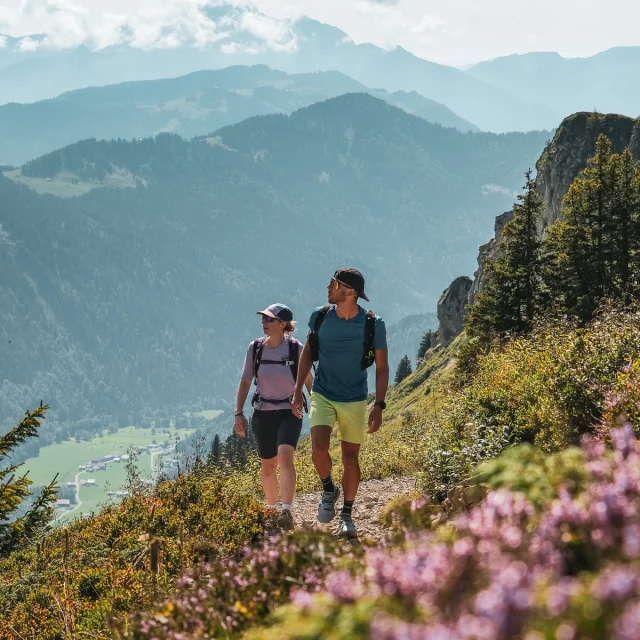
This is the number of kilometres of signposted walking trails within the municipality alone.
On display in a traditional dwelling in Le Grand-Bornand: the Maison du Patrimoine, which is open to the public.
That is the number of kilometres of marked mountain bike trails in Le Grand-Bornand.
Exploring the area around Le Grand-Bornand.