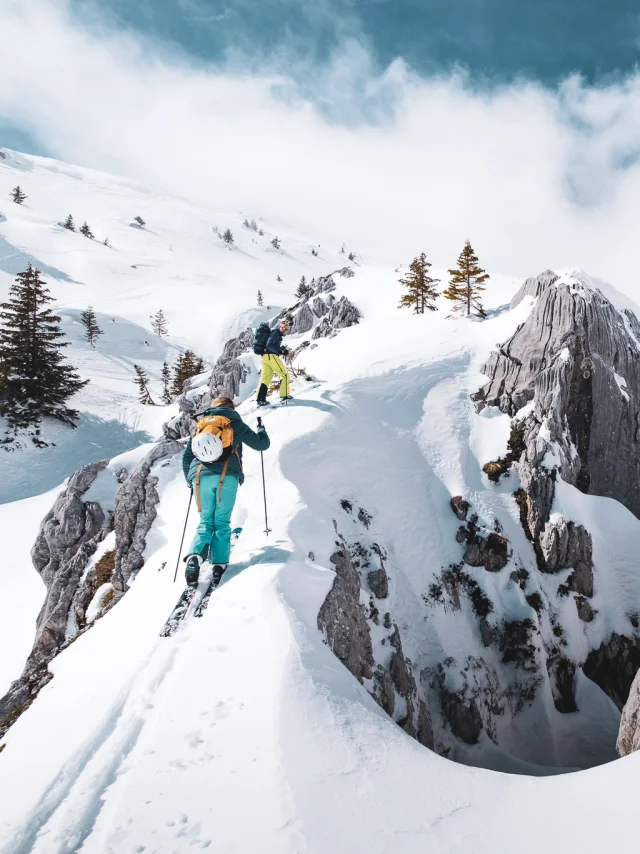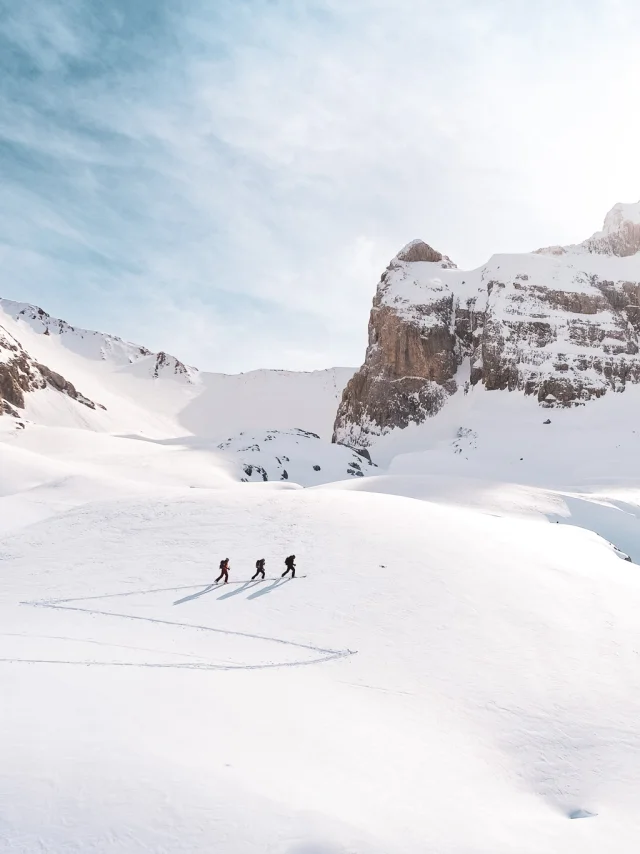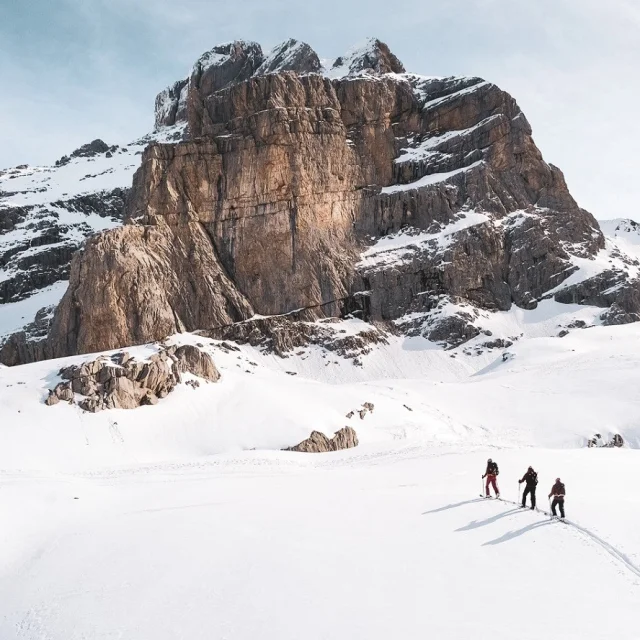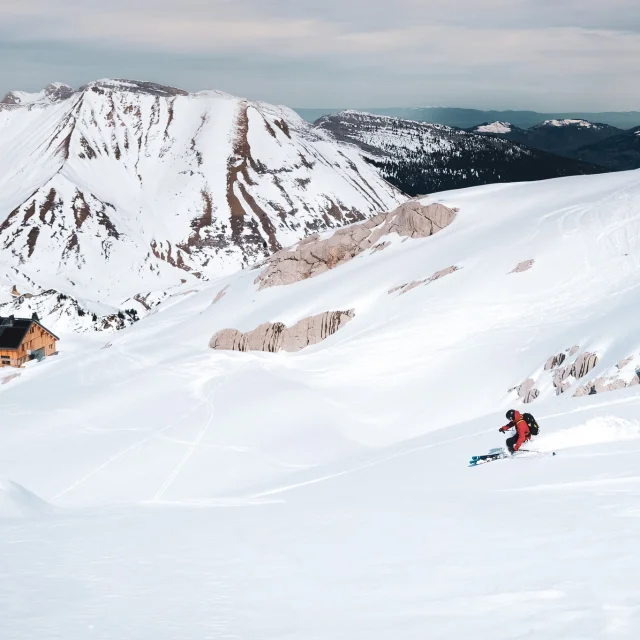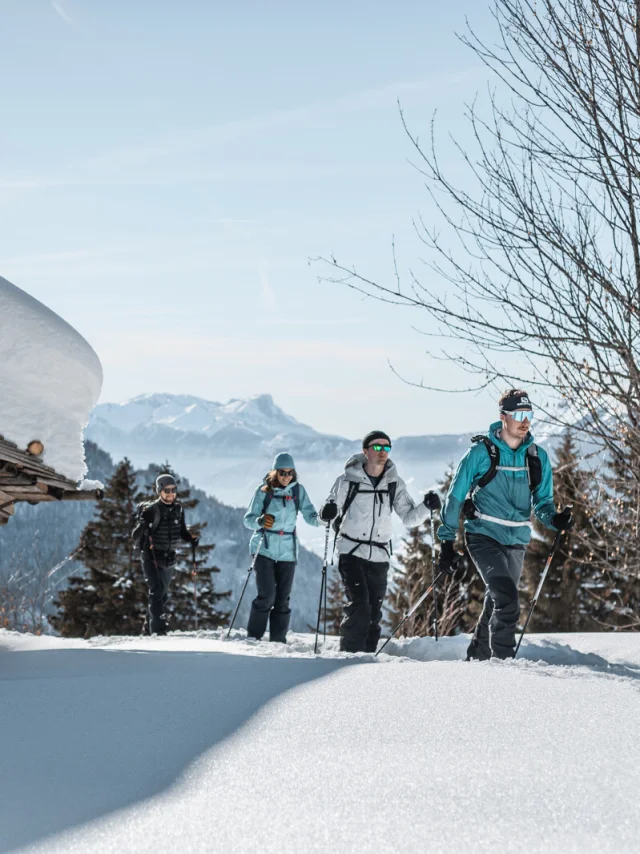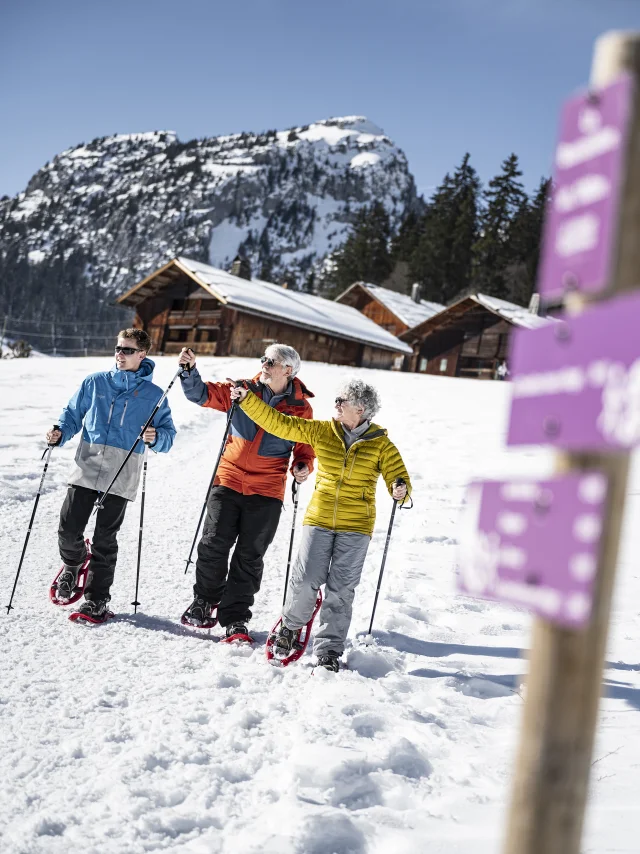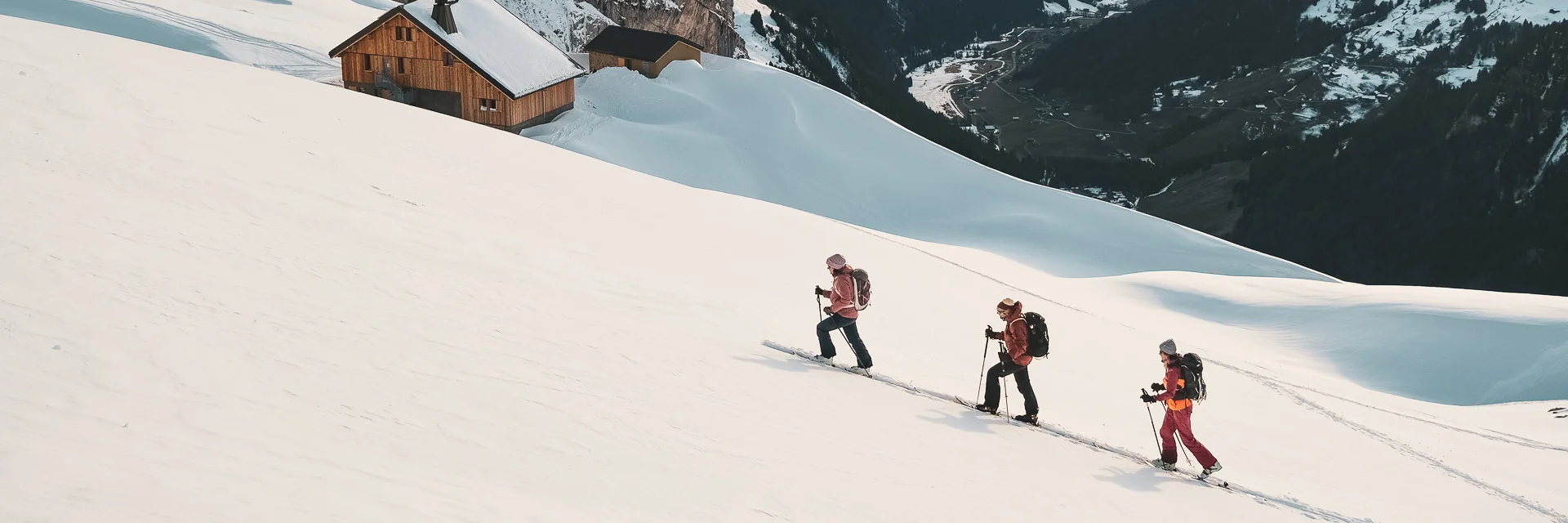
Hikers advancing in the snow, Gramusset refuge and Bouchet valley in the background.
©

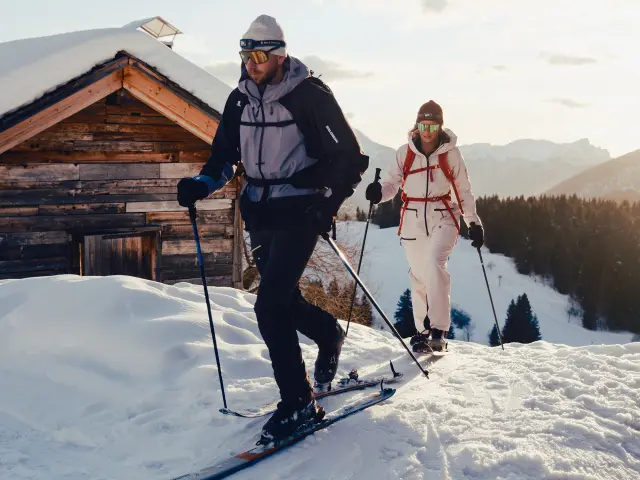
A team of three ski tourers make their way through the snow, with the Gramusset refuge and the Bouchet valley in the background.

|

© P. Guilbaud

Ski touring

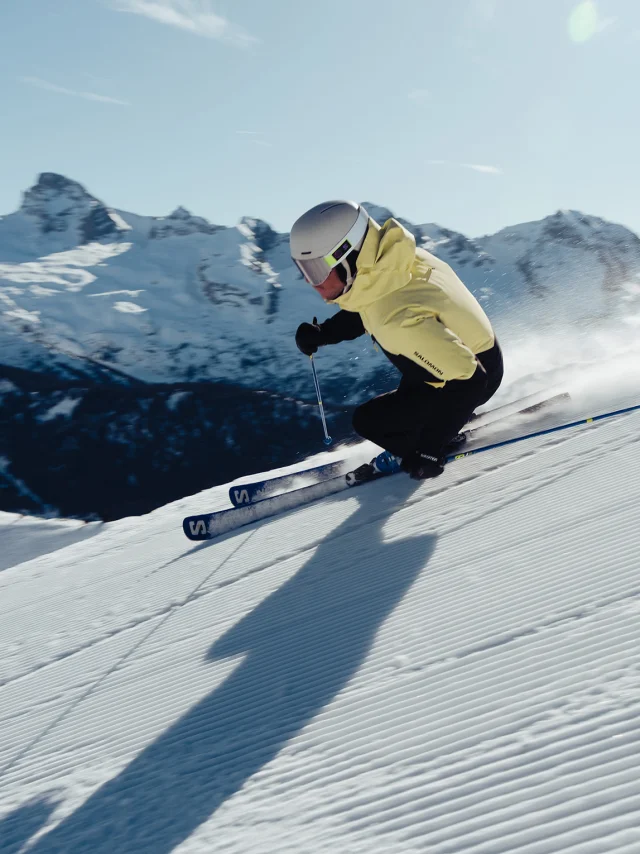
From the ascent to the descent: unforgettable excursions. In Le Grand-Bornand, ski touring is in our blood!

Get your skis on!

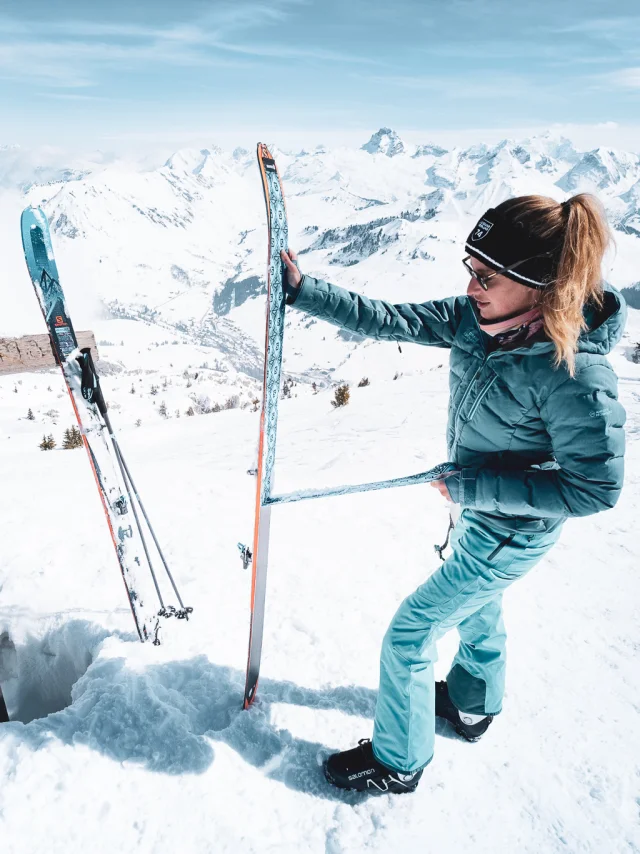
Watch this video to discover the best advice from our partner Salomon on how to choose the right ski touring skis!

Whether you’re looking for performance, lightness or stability, their experts explain the key criteria for finding the right kit for your skiing style.

Get ready to make the most of your mountain adventures with kit that’s perfectly tailored to your needs!
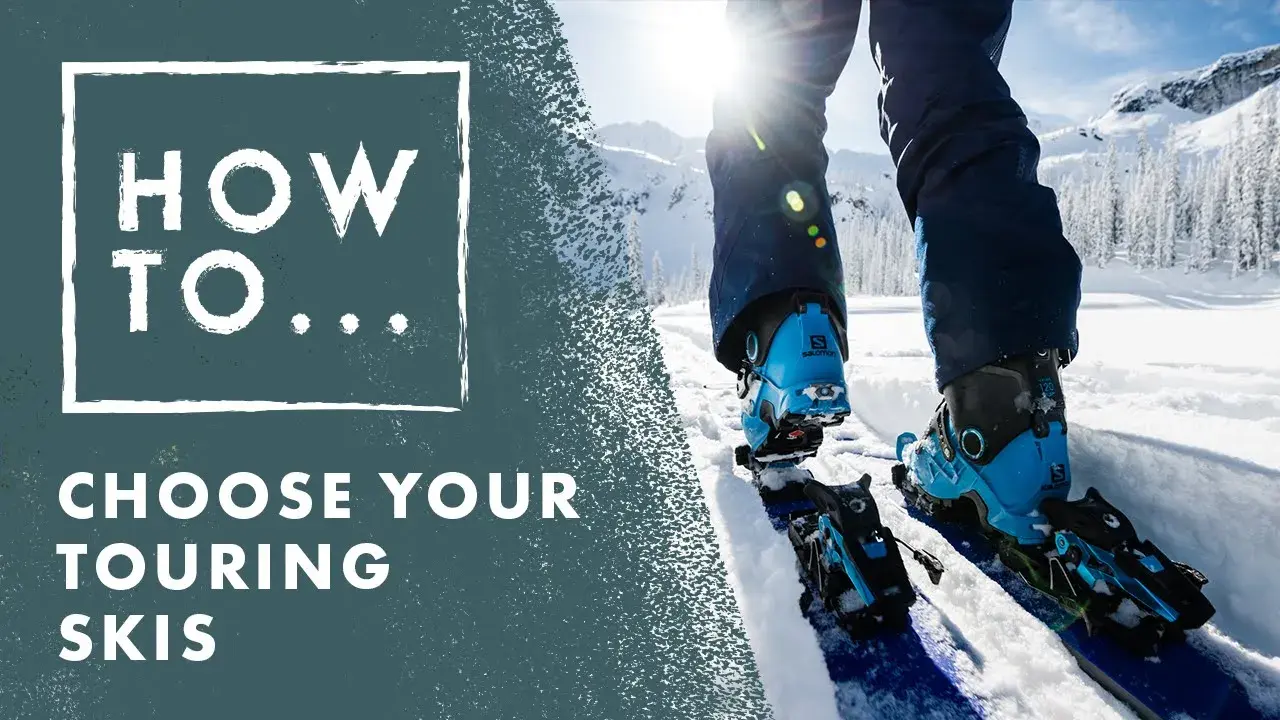
How to choose your touring skis | Salomon How-To

Hop on and slide! Your €20 package

Enjoy a ski touring package designed for adventurers: ski up to the Gramusset refuge (Pointe Percée), spend a night at altitude, then ski back down at your own pace over the following days. An unforgettable experience in the heart of the Aravis!

To learn the right safety practices in the mountains, it is advisable to train with professionals.

Separate access for each lift:

  • Rosay Gondola Lift + Châtelet Chairlift + Maroly Chairlift (or Terres Rouges Chairlift) + Les Annes Chairlift
  • Return via the La Duche & Le Châtelet chairlifts (whenever you wish)

Tickets available only from the ticket office.

Some routes within the ski area are also freely accessible.
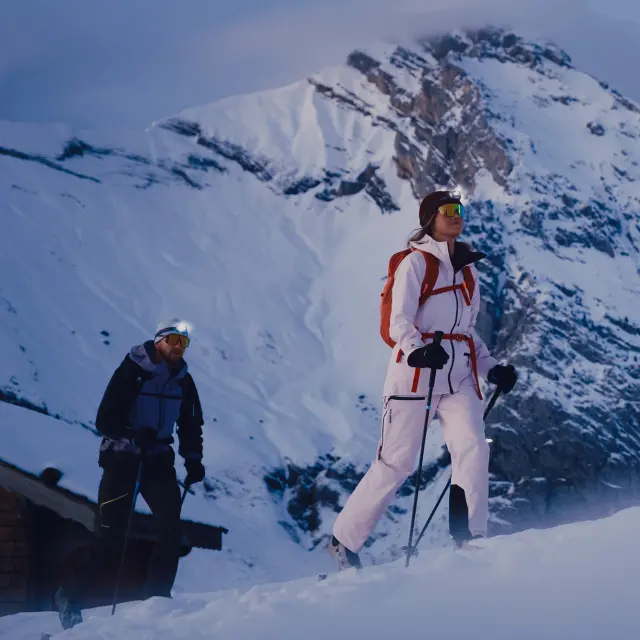
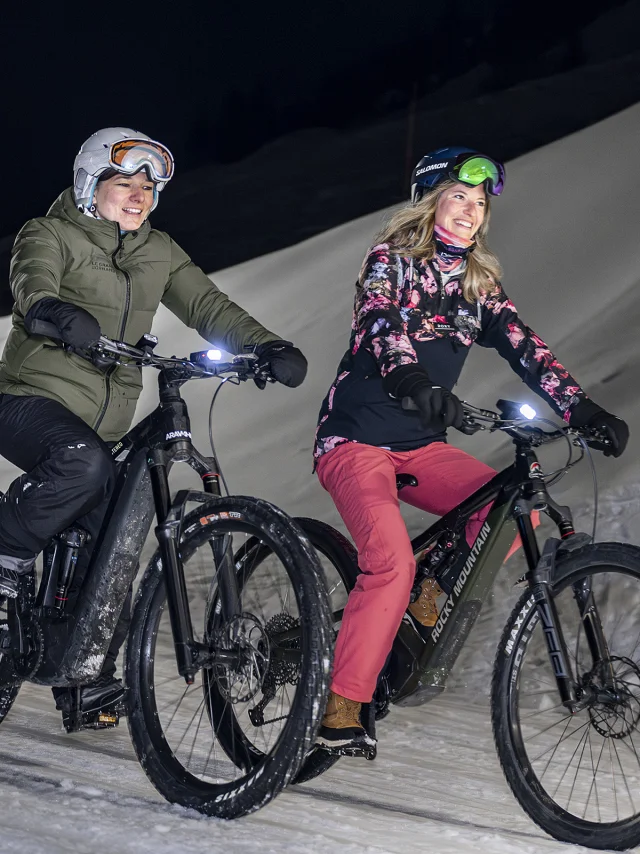
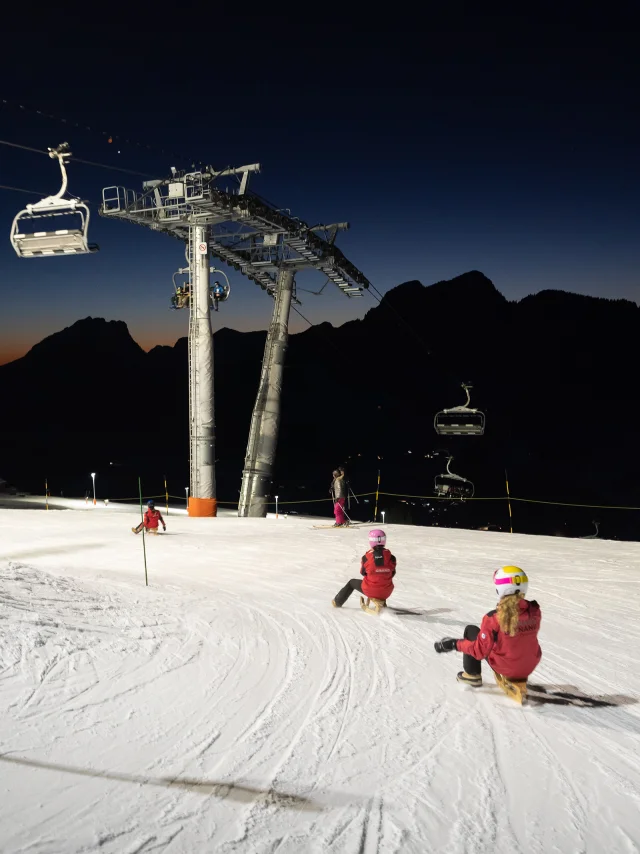
Among other things, enjoy our floodlit and signposted night-time ski touring run, and discover ski touring under the stars.

€20 single tariff

Compulsory equipment

  • Avalanche transceiver, shovel, probe (must always be in working order)
  • Helmet (recommended)

Preparation & planning

  • Check the Avalanche Bulletin and the weather forecast
  • Choose a suitable route and set a cut-off time for your return
  • Know your group and each person’s ability

Training & risk management

  • Be proficient in the use of an avalanche transceiver and rescue techniques
  • Maintain safe distances and avoid slopes steeper than 30° due to avalanche risk
  • Find out about the area

Communication & rescue

  • Let someone know your route
  • Carry a fully charged mobile phone, or even a radio or GPS device
  • Know the emergency number (112 in Europe)