©

Lgb 4698

Live the experience The chalet, an ingenious dwelling

The chalet: an ingenious dwelling

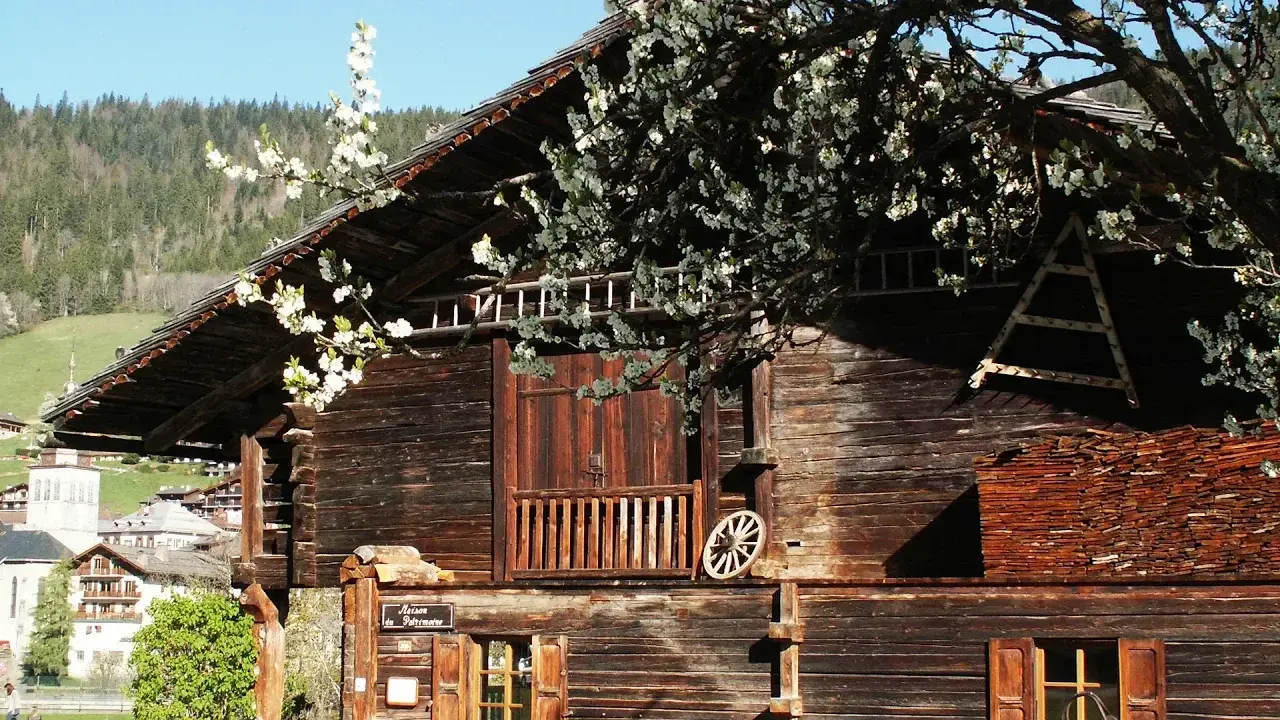
The authenticity of the mountain village of Le Grand-Bornand owes much to the preservation of traditional housing, epitomised by one of the symbols of the Alps, commonly known as the ‘chalet’ by most people, though the locals refer to it simply as a ‘house’! Indeed, the term ‘chalet’ has been in common use since Henry Jacques Le Même, a French architect and designer of the skiers’ houses in Megève modelled on ‘Swiss chalets’ (since the early 1930s), for new buildings inspired by the old, adopting their architectural codes.

The value of this built heritage has been forged over time by the determination of residents and public authorities to preserve this expertise whilst adapting it to meet the aspirations of our era, combining tradition and modernity.

Its construction

Housing is a key indicator of lifestyles, geographical conditions, and also the activities and social history of a population specific to each location. The chalets of Le Grand-Bornand are therefore unique and adhere to precise construction standards.

“Form follows function”. The aim was not to display one’s social status on the façade—hence the strong sense of village unity—but to be functional (only the size of the house could indicate wealth). The chalet had to meet climatic, geographical and agro-pastoral requirements, which is why people, livestock and crops are all found under the same roof.

Nor wasthe location chosen at random: water sources, aspect, abundance of grass, risks of avalanches, landslides and surface runoff were all criteria taken into account.

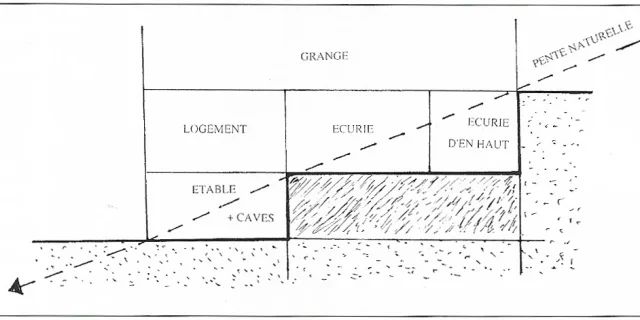
The slope is also a key factor in its positioning and the layout of the house’s entrances.

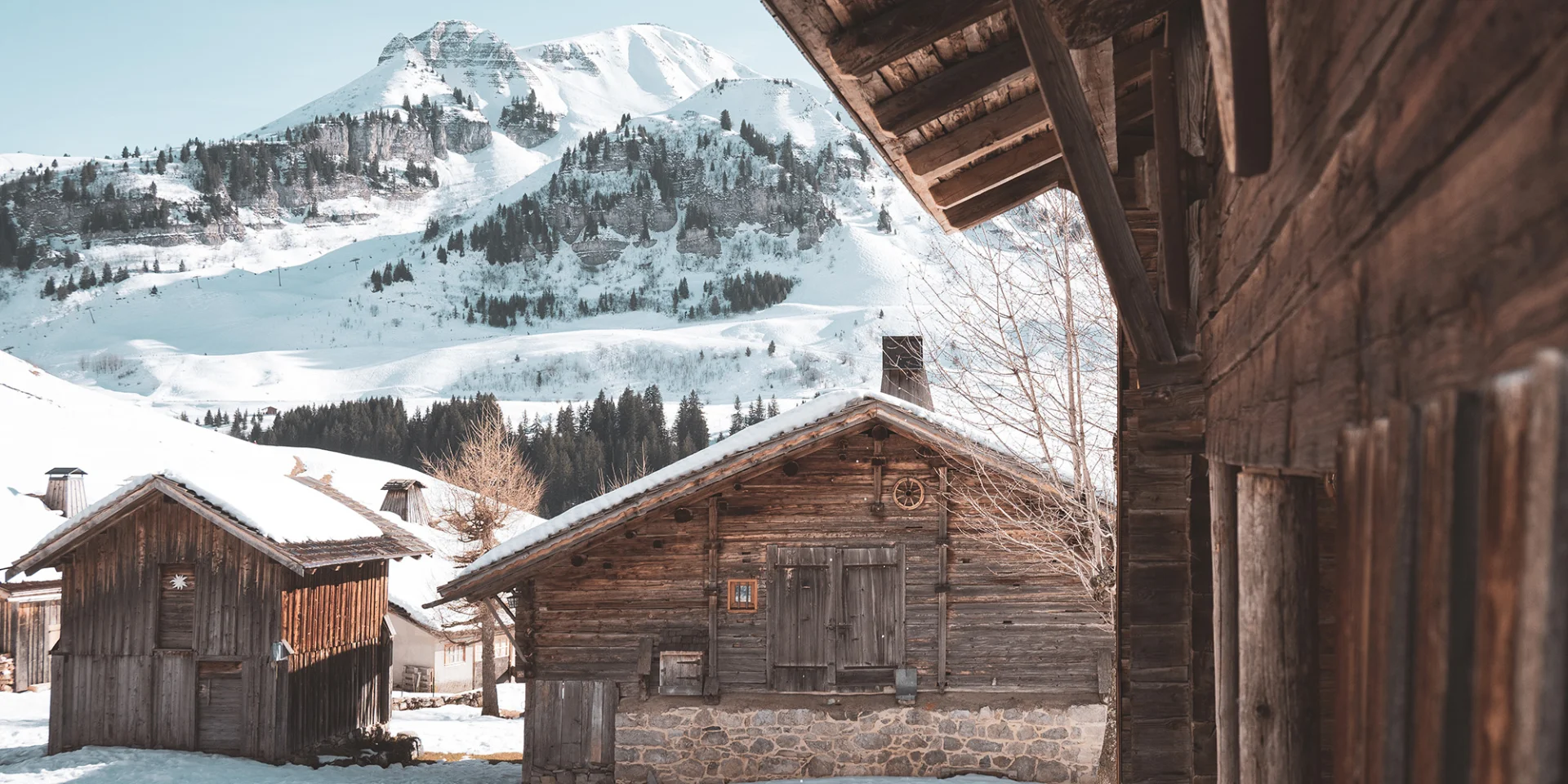
Fir wood (spruce) and stone (for the foundation), natural resources available locally, are the only materials used in its construction.

Different levels are dug into the ground to create the different levels of the house.

Stone, which is relatively resistant to fire and damp, is used to build the retaining walls (approximately 70 cm thick), the floors and the walls housing the hearth (fire).

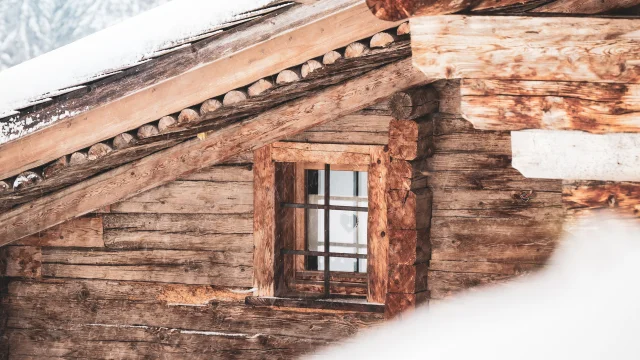
The walls, which are 13 to 28 cm thick (depending on the age and altitude of the building), are constructed by stacking planks, known as ‘maïres’, joined at each corner by notches, the ‘cozges’. Washed and dried moss ensures a watertight seal between the planks and vertical wooden pieces, the “liures” (ties), whilst wooden pegs hold the walls together.

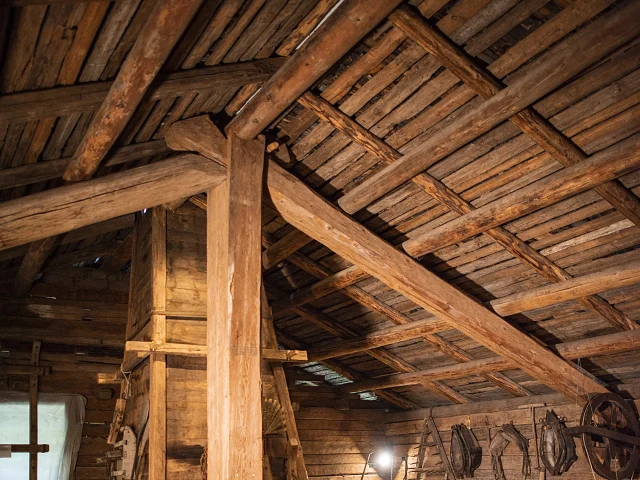
The roof structure must be sturdy to withstand the weight of the snow, and a central pillar, the “pointe d’âne”, which is up to 70 cm thick, is its centrepiece. This pillar runs the length of the house, and two rafters, the “donkey’s arms”, extend from the top of this pillar and rest on the side walls.

The layout of the house

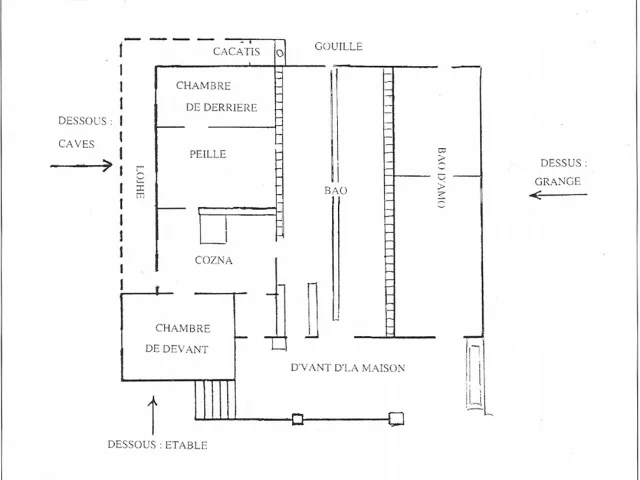
The front of the house, or “the front of the house”

The front of the house is the shared entrance for people and animals (access to the stables).
A trough, known as the “basché”, is often placed against the stone wall at the top of the house.
Between the entrance to the house and the entrance to the cowshed, there is “la gaine à la jument”, a wooden chute that carries fodder directly from the barn to the horse’s stable.

The Cozna

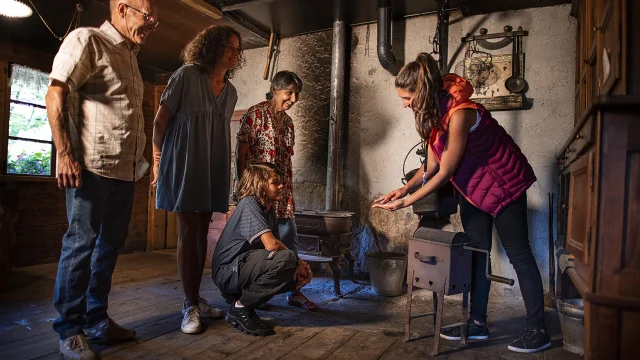
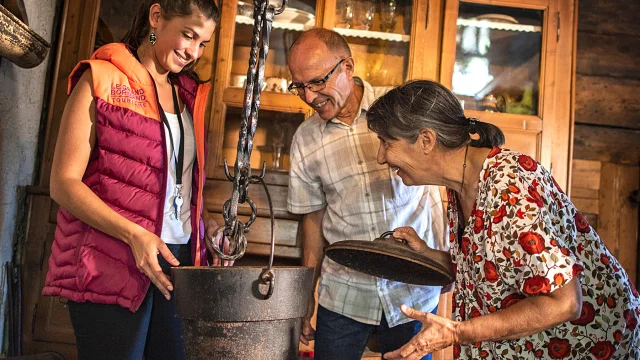
Once through the corridor, here is the kitchen which serves the whole house. Originally, it was the only heated room; before the arrival of the stove, a fire was lit directly on the floor on a stone slab, known as the “assi”. A galley hook was used to heat meals in cauldrons and other pots.

Leaning against the only solid wall in the dwelling—a thin one known as the “ponadmue”—the hearth was used to heat the adjoining room, the “peille”.

Within the thickness of this wall lies the “findri”, an ash pit used to keep food warm and to store the ashes that would be used in the spring for the big wash, the “grande boille”.

Above the hearth rises the wooden chimney, topped with a lid, the “charfio”, which allows the draught to be adjusted and protects against snow and rain. The chimney is also used for smoking meat.

Although heated, the kitchen remains a cold room used only for meals.

From simple shelves, the “marti”, or a piece of furniture that served as both a cupboard and a table, often made by the locals, to the bespoke creation of a piece of furniture by the first carpenters, known as the credenza, furniture and utensils have evolved over time to provide greater comfort.
The “cow shed” and the “amo shed”

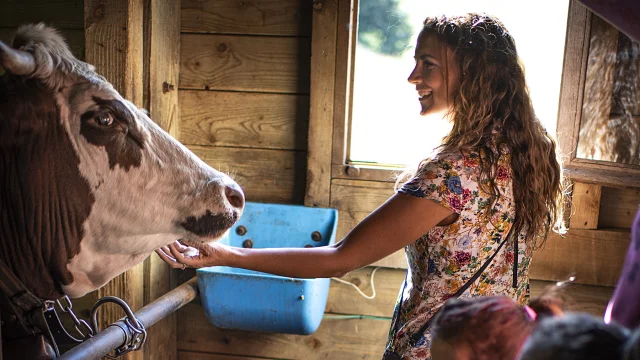
Accessible from outside and from the kitchen, the “bao à les vaches” (the cowshed) could hold 10 to 12 cows. With a fairly low ceiling, this room remained relatively warm. Near the window, a spot known as “the codire corner”, always kept clean, was furnished with two benches facing each other (one of which is called the “codire bench”) where the family would gather in the evening whilst keeping an eye on the herd.

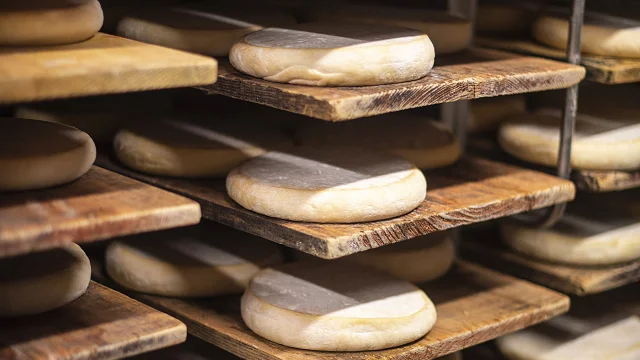
The “bao d’amo” (the upper stable) housed small livestock or served as a storeroom. A cellar, which could be used to store Reblochon cheese, is located at the back.

The barn

It extends across the entire area of the house and is accessed at ground level due to the slope of the land.

It is divided into three parts:

  • the “oëtre” for threshing and storing the harvest
  • the “soli” (hayloft), a storage area for hay
  • the solarets surrounding the barn, which are sheltered and well-ventilated and are used for drying hay.

To supplement the hay storage capacity, small barns are also located amongst the hay meadows.

The stable and cellars

In the basement are the horse stable and several cellars:

  • the Reblochon cellar, with a few sheep penned in front of it to maintain the temperature required for the cheese to mature properly.
  • another cellar, the ‘farto’, is used to store potatoes.

The loft

A small building right next to the house, sheltered from the wind and damp, airtight yet well-ventilated, it houses the food supplies as well as the family’s treasures (costumes, papers, jewellery, etc.), to protect them from fire, damp and rodents.

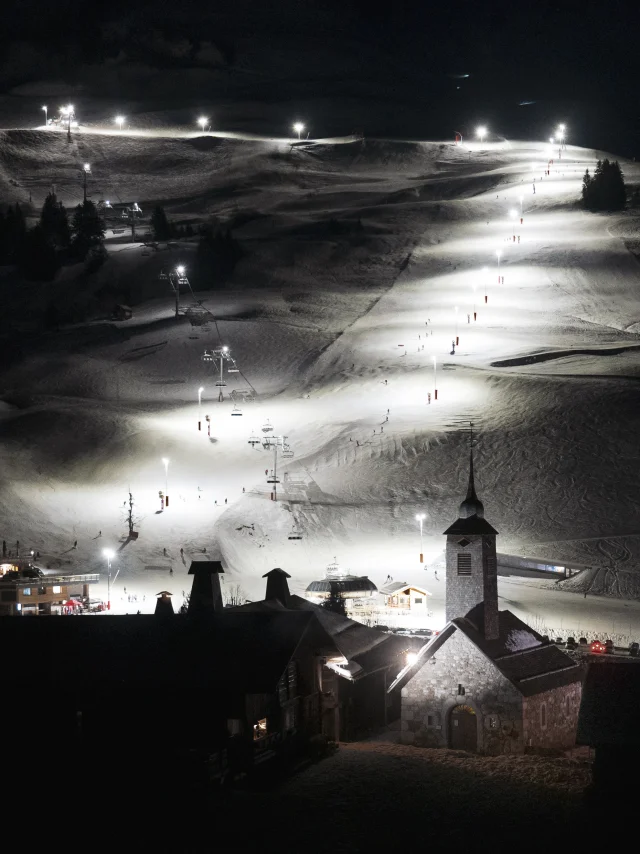
As you wander around, you’ll be able to discover and explore some 400 chalets, most of which are two centuries old, with the oldest dating back to 1664.

To find out more,

During your next stay, don’t miss a visit to the Maison du Patrimoine, a traditional house from Le Grand-Bornand dating from 1830, which has been restored and furnished. It offers a glimpse into daily life in days gone by and the timber-framed architecture specific to the Bornes-Aravis region. The museum has been listed as a Historic Monument since 2007.

Le Grand-Bornand - #MaisonduPatrimoine
Do you like this content? Share it!

More experiences in Le Grand-Bornand